Tuesday, January 25, 2011

Maus


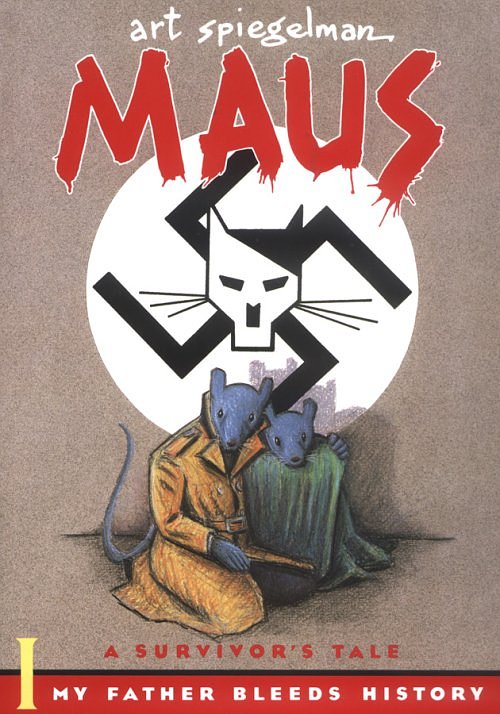
Recently, I read the first book of the series, Maus. Maus is a true story about the author getting his father to reveal his life to him so he may write a comic book about. This comic book is what became Maus.

In this book, the Jewish people who wear discriminated against were mice, while the Nazis were cats. I think this is really interesting to look at from that point of view, since cats are supposed to eat and attack and sorta of HATE mice. Like Tom and Jerry.

It seems like I enjoy stories with bad situations. For instance, earlier this school year, i read Emil and Karl (I have a blog post about it). They are both about World War II and living through it while being persecuted, although in Maus the author's father is a grown man and Emil and Karl is about two young boys.
Recently, I found out what a swastika is, and I realized just a moment ago that it's in the middle of the emblem on the book, with the skull- cat head. (I believe it is a skull...?) When I looked it up (on Wikipedia, I know, I'm TERRIBLE...) (Oh wait this is Wiktionary... whatever...) it shows up with three languages (I don't know how to explain it... here's the site... http://en.wiktionary.org/wiki/%E5%8D%90 ) and they're all from Asian countries. I THEN looked it up on Wikipedia and it says

"The swastika (Sanskrit: स्वास्तिक) is an equilateral cross with its arms bent at right angles, in either right-facing (卐) form or its mirrored left-facing (卍) form. Earliest archaeological evidence of swastika-shaped ornaments dates back to the Indus Valley Civilization of Ancient India as well as Classical Antiquity. It remains widely used in Eastern religions, specifically in Hinduism, Buddhism and Jainism. Following a brief surge of popularity in Western culture, the swastika from the 1930s became strongly associated with its iconic usage by Nazi Germany, and it has hence become stigmatized and taboo in the Western world; it has notably been outlawed in Germany if used as a symbol of Nazism. Many modern political extremists and Neo-Nazi groups such as Afrikaner Weerstandsbeweging and Russian National Unity use stylised swastikas or similar symbols."

So I know it symbolized Nazis, but I still don't really understand what it has to do with Buddhism and Hinduism. I suppose I will have to research more about it...

Thursday, January 20, 2011

Cirque du freak (Spoiler... for first book...)


Cirque du freak seems like the only vampire series that no one hates on. (Twilight, on the other hand...)
When I read the first one, Darren has to leave his family in order to continue to live.
I feel bad for Darren. He had to fake his own death to survive, and his parents believed that he really had died. When people die, they realize that leaving people behind is just as hard as being left behind, if not worse. I can't imagine leaving my family. Even though sometimes I get sick of them, especially my brother, I can't imagine living without them.
This made me wonder if Darren was on bad terms with his family. Even if he is, I can't believe that he would swap his LIFE for his friend! I guess I can, but Sam, his friend, had begun to hate Darren because he had become a vampire (jealousy is BAD). To get a cure to save Sam, Darren had to become a vampire. I think think was a very generous act, since Darren knew that Sam would hate him forever if he saved him. Then again, he didn't want to have Sam die feeling that he hated Darren.

Wednesday, January 12, 2011

Fruits Basket Final Volume (a bit of a spoiler but read it anyways :D )


Comics have heroes. They have them defeat evil, demented monsters or villans with super strength. They even, sometimes, have a deep, thoughtful plot and theme.

Recently, I've been rereading a lot of manga series, including Fruits Basket by Natsuki Takaya. (Well, I've been rereading the few volumes I actually OWN of the series). I love this series - romantic comedy is my treasure :)

Fruits Basket is very sad sometimes. The main character, Tohru, her mother died. In this last volume, it shows Kyoko (her mother) of what she was thinking when she was dying. I want to incorporate it into one of my poems. "I understand now. Leaving people behind, being left behind. They're both... so hard..." And she starts going on about how much she loved Tohru and if she loved her enough. It's really touching and sad. This is one of those things you would wish to be real, to really have happened. It's like in The Office, you (well, at least I do) wish that Pam and Jim were a real couple :)

I remember when I finished the series, the last sentence was so touching, I cried. I'd never cried about a book before, but it was so beautiful and I was so sad that the series had ended - I was overwhelmed. "Repeat the good... and the bad. Do it all... and pile on the years." I also want to put this into one of my poems. My topic is Icy love. I think. Or Icy life. something so it sticks out - something good and bad. This is where I can say the quote again :D

Repeat the good... and the bad. Do it all... and pile on the years.

Thursday, January 6, 2011

Honey Hunt ~ :D


Recently, I have been reading a series called Honey Hunt. Over the winter break, I read five entire volumes... I must get the sixth one...
Anyway, in Honey Hunt by Miki Aihara, the main character, Yura Onozuka, is the daughter of two famous celebrities. Her mother is Yukari Shiraki, a famous actress voted "Best Mom" for a magazine. She's not. Her father, Takayuki Onozuka, is a famous musician.

This story has many problems, which I can not discuss right now because it would give away the book and because Ms. Rear will tell me to re-do this if I summarize it.

When I was reading the series, I started thinking, "I wonder if this hard life for Yura is how it is for many children of real celebrities." It made me think of Madonna's daughter, Lourdes. I didn't know who she was, until someone said "Madonna's daughter". It's like that for Yura too, she's not known much and is referred to as "the daughter of Yukari Shiraki".

Also, I sometimes wonder if Lourdes has any talent, or if she just goes to LaGuardia because she's Madonna's daughter and LaGuardia can use that to boast. I feel bad for people who aren't known for themselves but only through other people.

Friday, December 10, 2010


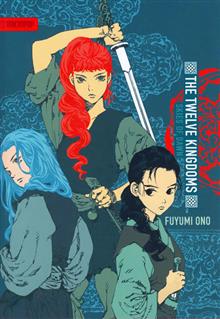
I am currently reading The Twelve Kingdoms : Skies of Dawn by Fuyumi Ono. This is the fourth and last book of the Twelve Kingdoms series. This book draws you in with three main characters. Yoko, the star of the first book, returns. She is now the King of Kei (yes, all leaders are "kings", even if they're female...).
In the book, two new main characters are introduced, Shoukei and Suzu.

Shoukei is the former princess of Kei, and her parents were murdered by Kei's governer. She hates Yoko because she is now living the life she should have had.

Suzu, on the other hand, adores Yoko.They've never met, but they are both kaikyaku, people who magically and unintentionally cross the Void Sea from Japan to the Twelve Kingdoms. She believes that, since they've both been through the hatred of civilians, Yoko will pity her and punish Riyou for causing her emotional harm.

I think that once Suzu actually meets Yoko, she will be upset because Yoko may not be the kind of person she expected her to be. Then, for Shoukei, she will meet Yoko and she will realize she was wrong about her.

Thursday, November 4, 2010


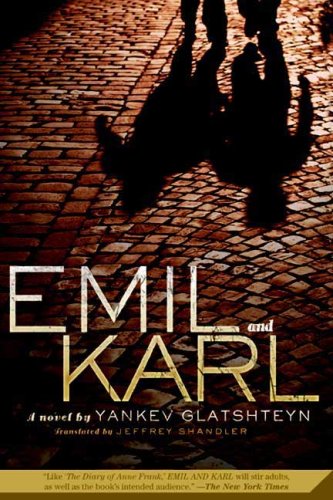
In Emil and Karl, so many horrible things are happening in the text.
Karl's mother is taken away from him by the Nazi regime and his father died long before because he fought for rights; he was a Socialist.

Emil's mother is also taken away because she is very ill. His father was killed by the Nazi regime and sent to Emil and his mother, cremated.

It's easy to see there is no justice in Emil and Karl. It's like a little kid version of showing racism and the Holocaust. It's not really for little kids though, you wouldn't read this to elementary school kids.
It's especially amazing that this book was written DURING the Holocaust, not after.

Also, I think that in this text, Emil and Karl's point of views are missing. Karl just doesn't understand WHY Hitler wants to get rid of Jews and others if they're not Aryan. I'm not sure he and Emil actually understand WHY though. It's just that they're parents told they Hitler was bad. Emil is sort of like the person who doesn't know what to do. He might WANT to be different because he's hated so much. He might think "Why did I have to be like this? Why couldn't I be RIGHT and not HORRIBLE as they say I am?"

This book is very serious and that it needs to be read with an open mind.

Friday, October 22, 2010


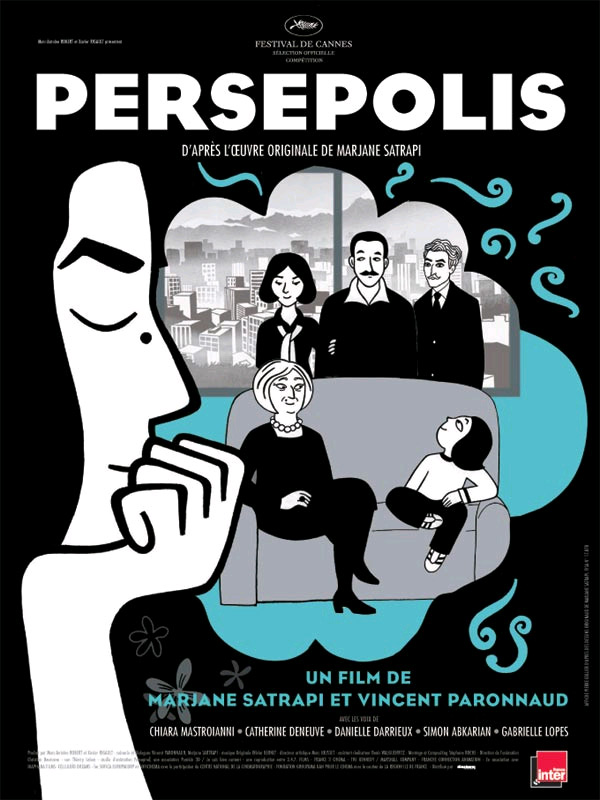
Religion is useless. Countries all over the world are prejudice against other religions. It is also the same with government ideas on economy and gay rights. In Persepolis, these two issues come up.

In Persepolis, at the beginning of the book, a fundamentalist man was saying that bilingual schools had to be closed down because "they are symbols of capitalism". But later in the book, it speaks of how Marji's grandfather became a communist and he was tortured.
Since capitalism is religious compared to communism and Iran was religious, I think that's probably why they prosecuted communists. Even though people have different views, it's not that bad.

Marji's family's friends were whipped because they were homosexuals. Even though the government can't do that here, lots of people still use hate crimes towards gays, like in the short story Am I Blue?

People shouldn't hate on people just because of differences. Imagine if everyone had blond hair, blue eyes, were all obese and everyone's name Frank. There would be no differences between anyone and nobody would no anybody. It's also like this with school uniforms, I think, to make it be as if everyone's equal.